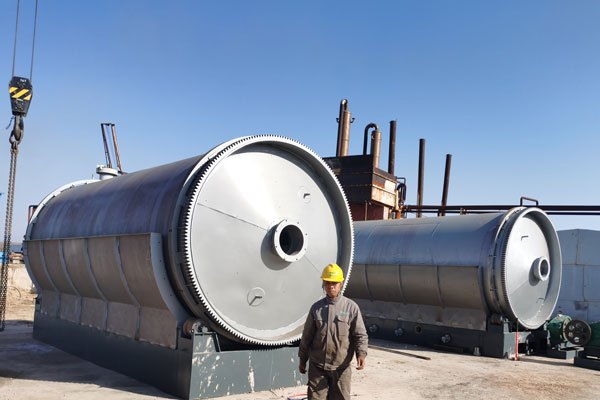
Waste tire pyrolysis plants have emerged as pivotal solutions in the management of end-of-life tires, transforming a pervasive environmental burden into valuable industrial resources. By decomposing rubber into its constituent fractions, these systems generate multiple by-products with versatile applications across sectors. With the advent of advanced technologies such as the Beston pyrolysis plant and fully continuous tyre pyrolysis plant models, the efficiency, scalability, and output quality have significantly improved, making tire-to-oil conversion economically and environmentally viable.
Pyrolysis Oil Utilization
The primary by-product of a waste tire pyrolysis plant is pyrolysis oil. This viscous, high-energy liquid can function as an alternative fuel for industrial furnaces, cement kilns, and boilers. The fuel properties—such as high calorific value and low sulfur content—allow it to replace traditional fossil fuels partially or fully, reducing operational costs while lowering greenhouse gas emissions. In sectors requiring liquid hydrocarbons for energy, the integration of a tyre to oil machine enables on-site production of fuel, enhancing supply chain resilience and energy security.

Carbon Black Applications
Another significant output from tire pyrolysis is carbon black, a fine black powder that can be refined further for industrial use. This by-product finds applications in the production of rubber products, plastics, and inks. Carbon black derived from a fully continuous tyre pyrolysis plant often exhibits uniform particle size and high surface area, properties essential for reinforcement in rubber compounding. Additionally, its role as a pigment in coatings and construction materials broadens its market reach, transforming waste tires into a functional commodity for high-value industries.

Steel Wire Recovery
Steel wires embedded in tires are separated during pyrolysis, resulting in a clean metallic fraction. Recovered steel can be directly supplied to steel mills or construction industries, reducing the demand for virgin steel. The use of Beston pyrolysis plant models ensures efficient separation and minimal contamination, enabling the steel to meet industrial standards. This circular approach mitigates environmental impact, lowers material costs, and supports sustainable manufacturing practices.
Syngas and Thermal Energy
During pyrolysis, volatile gases are released, which can be captured as syngas. This combustible gas mixture primarily consists of hydrogen, methane, and carbon monoxide. Syngas can be utilized to sustain the thermal requirements of the pyrolysis process itself, creating a self-sufficient energy loop. Moreover, surplus syngas can be harnessed to generate electricity or heat in adjacent industrial facilities, demonstrating how a tyre to oil machine contributes not only to material recovery but also to energy valorization.
Industrial Integration and Process Efficiency
Modern fully continuous tyre pyrolysis plants have transformed by-product management into an integrated industrial operation. Automation, temperature control, and feedstock flexibility enable the processing of diverse tire types with minimal downtime. By strategically aligning output streams—pyrolysis oil, carbon black, steel, and syngas—with specific industrial applications, businesses can maximize profitability while adhering to environmental regulations. This holistic utilization model exemplifies how tire waste can be converted into a suite of commercially valuable resources rather than an ecological liability.
Environmental and Economic Impacts
The adoption of waste tire pyrolysis plants generates tangible environmental benefits, including landfill diversion, reduced carbon emissions, and conservation of natural resources. Economically, by-products create multiple revenue streams for industrial operators, enhancing return on investment. Integration of Beston pyrolysis plant or a fully continuous tyre pyrolysis plant ensures continuous operation, high throughput, and consistent by-product quality, further reinforcing the feasibility of tire-to-oil operations in large-scale industrial contexts.
In conclusion, the industrial applications of waste tire pyrolysis plant by-products extend far beyond simple recycling. From fuel substitution and material reinforcement to energy generation and metal recovery, these outputs exemplify the convergence of environmental stewardship and industrial innovation, positioning tire pyrolysis as a cornerstone of sustainable manufacturing.